Thursday, 4 August 2022

Who Is Buying Remote Property?

When people ask about the types of real estate we sell, one of the things that fascinates a lot of them is the remote property sector. While people may daydream about getting away from it all, very few actually pursue owning a remote piece of property; one that has no road access, no visible neighbours and no services.

So who are the prospective buyers looking at this type of property? Surprisingly, there is no specific buyer profile. While they do all share a desire for remote land, their reasons for it and their demographics are as different as can be.

Off-grid living has become a popular topic on social media and there are a handful of reality shows that address it as well. This attracts a variety of people, whether they be young people feeling that they want to start their lives being self-sufficient and independent, or older people who have experienced a life change and feel the need to disconnect from society in some ways. Families, couples and single people all express interest in this desire to live off-grid.

For other prospective buyers it is about having a place to connect with nature completely. They may not want to live full-time on the property, but instead are looking to have a private place where they can go and camp for several weeks at a time and disconnect.

Some prospective buyers want a piece of remote land as security. These are people who are concerned about climate issues, or political issues, or societal issues, and feel it would be of benefit to have a piece of land somewhere remote ‘just in case’.

Finally, there are those looking to establish a family legacy. Whether they plan to develop the property or not, they like the idea of a remote piece of the west coast being in their family for generations to come.

Whatever their reasons, we are happy to work with all prospective buyers as one of the few real estate teams to market and source remote properties along the BC coast.

It’s a Coastal Lifestyle … Live It!

Thursday, 21 July 2022

BCO Coastal Gems: Owen Bay

Located within the heart of the Discovery Island group and surrounded by beautiful natural scenery and an abundance of wildlife, this Sonora Island area offers all types of outdoor recreation and sport activities - fishing, boating, diving, and wildlife viewing, while seafood such as crab, prawns, clams and oysters are all available within minutes of this region. 


Approaching Owen Bay from the end of Busby
(Springer Point at the south tip of the development
is in the centre of the photo)

Owen Bay is located on the south side of Sonora Island on Okisolo Channel, just above Hole in the Wall rapids. 

The Discovery Islands are rich in First Nations culture and history.

view out from Busby

Owen Bay was first settled by non-indigenous people approximately 100 years ago, at times it was home to a school, church and general store, however the location did not attract a more permanent settlement in the long run. It has evolved into a quiet, coastal vacation and recreation community with a small complement of full-time residents. The Owen Bay development encompasses both a portion of Sonora Island and Busby Island, which is separated from Sonora by only a small channel.

looking across from Sonora to Busby

There are government dock facilities located in Owen Bay. Owen Bay provides excellent protection for both mooring and anchoring your boat and the roadway leading from the Government Dock throughout the area is more than adequate for vehicles if one chooses.

Owen Bay government dock

Owen Bay Rd

There are a few marine parks to enjoy within close proximity, including the Octopus Island Group Marine Park which is only minutes away. Access to Owen Bay is by boat or float plane only. 

aerial approach to Owen Bay

Campbell River is approximately 45 minutes away by boat and provides an excellent centre for supplies and services. During the summer months there is regularly scheduled water taxi service from Campbell River to Owen Bay and Busby Island. There is also regularly scheduled barge service to Owen Bay to bring propane and fuel as well as any arranged deliveries (groceries, building supplies, etc). Other areas such as Browns Bay on Vancouver Island or Heriot Bay on Quadra Island provide even quicker access through primarily protected waters. 

It's a Coastal Lifestyle ... Live It!

Thursday, 7 July 2022

Inlets of the BC South Central Coast

The South Central Coast of BC is accessible only by boat or float plane as it is surrounded by the high peaks of the Coast Mountain Range on the mainland and the straits that run between the mainland and Vancouver Island. This wilderness region is well known for amazing natural beauty, wildlife viewing and fishing and it is popular with boaters and outdoor enthusiasts.

Boating in Bute Inlet

Bute Inlet, considered one of the grandest fjords in the world, is surrounded by the rugged coastal mountains of the British Columbia mainland coast, capped by the Homathko Icefield and numerous other glaciers. It runs 80km long and averages 4km in width, and is one of the deepest fjords in this region at 660m. It is located approximately 30 miles north of Campbell River on Vancouver Island. 

Bute Inlet

Loughborough Inlet is approximately 22 miles deep, running from the mouth of the Stafford River to Cordero Channel across from West Thurlow Island at the northern end of the Discovery Islands. It is just south of Johnstone Strait. Its average width is 2.5km and the inlet is halfway between the entrances to Knight Inlet and Bute Inlet.

Loughborough Inlet

Toba Inlet is known for its amazing waterfalls and emerald waters. As one of the shorter inlets in this stretch of coast at only 35km in length, it is popular with kayakers and boaters as a great place to explore and offers all of the amazing wildlife viewing that the entire region is known for.

Toba Inlet 

Knight Inlet is the largest in this section of coastal fjords, stretching about 125km and averaging 2.5km in width. The opening of the inlet is just north of Johnstone Strait in Queen Charlotte Strait, along the southern edge of the Great Bear Rain Forest. Knight Inlet is well known for bear watching during the salmon runs of the late summer/early fall especially.  

Knight Inlet 

These inlets and all the other waterways that make up this region provide a diverse, fascinating wilderness experience to boaters and adventurers.

It's a Coastal Lifestyle ... Live It!

Thursday, 23 June 2022

Turning on the Tap

When you live in a city or town, domestic water is generally not thought about much, unless water restrictions are enacted. However, for those who live outside the boundaries of cities and towns, domestic water is an important issue when setting up a property. Where will the water come from? How will it be used? How much will be needed? All of these questions should be answered when considering a remote or rural property. If the property already has a home in place, prospective buyers should be asking the same questions about any water system in place.

Domestic water outside of city water systems generally comes from three sources: groundwater through wells; surface water through springs, creeks or rivers; and rain water. (There are other options, such as desalination plants if one lives on the ocean or water delivery which many  road-access island communities use in the dry summers when wells and cisterns are empty.) 


The Water Act of BC defines what licencing is required and what that licence entitles one to. A licence will define where the water may be taken from, how much water will be taken and what the water will be used for. 


If the property has an existing well, it may be possible to look up information. The province does track wells installed by well drillers, however this database was voluntary before 2016. This is something we regularly look up for our remote and recreational listings.


Rain water collection is commonly done through pipes/gutters that drain into a holding tank (sometimes called a cistern) which can be either above or below ground. The holding tank then has pipes that direct the water to where it is needed, either by gravity-feed or through a pump system.


Many recreational and remote property owners use tanks to store additional water no matter what water source is used. This is especially useful on the west coast, where we tend to have plenty of water in the wet winter months and less in the summer months when the properties are seeing heavier use. Other properties will use a hybrid system, collecting rainwater for garden use for example, while using well water for inside the residence.


Knowing where the water is coming from, or what the options are to get water, makes for good peace of mind when considering an unconventional property.


It's a Coastal Lifestyle ... Live It!


Thursday, 9 June 2022

Power Considerations

 When dealing with recreational and remote properties there are considerations that don't come up with regular residential properties. For instance - is there power and where does it come from?

Some recreational and remote properties are close enough to small communities that they can hook into existing BC Hydro power supplies. It can be surprising how many boat access communities, such as Quatsino on the NW coast of Vancouver Island, actually have power from BC Hydro. This is then just like obtaining power for any new property - lines need to be accessed and power brought into the property through coordination with BC Hydro, neighbouring properties and local communities.


What are the options for locations with no established power grid?

Gas fuel is one of the most commonly used power sources. This involves generators and usually a battery bank to store power so that the generators aren't running all the time. This requires gas to be brought on to the property, and general upkeep on the equipment. Some smaller communities, such as in the Discovery Islands, have regularly scheduled gas deliveries arranged with barge companies and local suppliers, while in other cases deliveries are arranged individually or gas is brought in by the owner.

Solar power is now a common choice, and it is not unusual to see a house or cottage with an array of solar panels on the roof, or as a stand-alone system. These supply a battery bank which stores the energy. Some larger properties use solar power but keep a gas generator on hand as an emergency back-up system. Often there is a hybrid approach, with lighting being solar power driven and appliances being gas, for example.

Another option for those who have access to a running water supply is personal use hydro-power. This requires a license for the water use, and on a good, strong water source can be a great power supply. There are a variety of set-ups depending on the amount of power required.

All of the options have pros and cons when it comes to upkeep, initial cost of installation and materials, efficiency, etc. It requires some good research both on the options and the property itself. At BCO we have a good deal of information on alternative energy and are always looking out for new and innovative ideas in power for remote/recreational properties.


It's a Coastal Lifestyle ... Live It!

Thursday, 26 May 2022

BCO Coastal Gem: Tahsis

The coastal village of Tahsis sits at the head of protected Tahsis Inlet, on the West Coast of Vancouver Island near Nootka Sound. Tahsis is a (gravel) road access village, with services and shopping. It has a K-12 school, a recreation centre with swimming pool, bowling alley, workout room, gym and climbing wall, post office, hardware store, convenience store with gas station and restaurant, and a mechanic. Services include a medical clinic, ambulance, coast guard station and volunteer fire department. Campgrounds and B&Bs provide accommodation.

Tahsis offers access to a number of wilderness hiking trails, caving, incredible ocean kayaking, scuba diving, wind surfing, sailing and canoeing. The area is best known for offering world-class sport fishing as massive runs of salmon migrate down the west of British Columbia to their spawning grounds in coastal streams and rivers. Anglers can also venture out to the Pacific Ocean where fishing is excellent for halibut, flounder, rockfish and lingcod. Crabs, prawns, shrimp, oysters and other seafood are also plentiful. Wildlife abounds! Black bear, wolves, cougars, Roosevelt elk and coastal black-tailed deer are frequent visitors to this area. Guests from around the world marvel at the eagles, sea lions, whales and other marine wildlife that is common in the nearby waters. 

The picturesque and versatile west coast village offers a full-service marina and a safe, friendly small town atmosphere that boasts an incredible blend of outdoor adventures and some of the most rugged and breathtaking scenery in British Columbia, Canada.

To find out more about this coastal community, click here!

It's a Coastal Lifestyle ... Live It!

Thursday, 12 May 2022

Private Islands

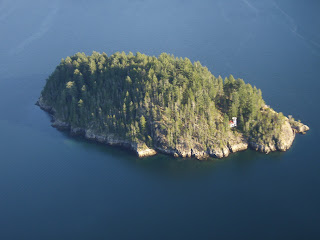
Buying an island may seem like a dream to many, but in reality private islands are sold in almost every budget category. They are not common, because there simply aren’t a lot of them, but there is a wide variety, from a small rocky islet  to a large developed estate.

For some people the owning of the island is enough, and it will never be developed. It will remain a natural escape from the world, perhaps for camping on or just day trips. Or just for someone in a land-locked big city to know, they own an island in the Pacific Ocean.

Other people want to live on the island, at least some of the time if not full-time (and some definitely want to live there full time). That then becomes a more involved exercise. Some people circumvent all these complicated issued by buying an island already developed, and so only requiring upkeep. But others want to create their own, personal retreat and place. For them, the work and the creation of building is part of the desire.

Like any remote coastal property, logistics are a part of the consideration of owning a private island. Here is what you need to consider.

1. How will you get there? Is this easily accessible by boat? How far is it from a launch point? Is it easier to take a float plane to the property? If you want to travel to the island regularly, how long will that take you?

2.   2. What are the services? If there aren’t any already in place, how will you service a residence if that is what you want to have on the island?

3.   3. How will you get supplies to the property?

Private islands are fun to market as each one has something special, a character all its own. People love to look at the listings and we always get lots of questions about them. They are rarely the oddest coastal property we have listed but they are generally the ones that people are most curious about.


It's a Coastal Lifestyle... Live It!