Showing posts with label real estate. Show all posts

Thursday, 6 July 2023

Fix it? Or leave it “as is”?

When preparing your property for sale, you want to make it as attractive as possible to buyers. After all, the more buyers like what they see, the higher the probability you’ll get good offers. 

That’s why it’s advisable to clean, declutter, decorate, fix, and improve as much as possible. Of course, when we're talking about a remote or recreational property, this can be difficult. 

The question then becomes how far should you go with fixing and improving? For example, should you tear down the old deck and build a new one? Or, should you leave it as is? Should you paint the main floor? Or is it okay to leave the faded finish and few wall dents just as they are? 

Those can be difficult questions to answer because many factors come into play. 

• What is the traditional return on investment for that home improvement? (In other words, how much will you get back when you sell?) 

• To what degree will the fix or improvement help sell your home faster and/or for a higher price? 

• If you don’t make the fix or improvement, will those deficiencies be likely to dissuade buyers who would otherwise be interested in buying your property? 

• What are the current market conditions? Are there other listings in the area competing with yours? 

• How much will the fix or improvement cost? Is it affordable, given the benefits of having a listing that’s more attractive and move-in ready? 

The answers differ depending on where you property is, what else is for sale around it, and what buyers for those types of properties expect. We can help you find answers by looking at the market and the comparable properties.

Once you have answers to those questions, you’ll have a clearer idea of whether to fix it or leave it as is.

It's a Coastal Lifestyle ... Live It!

Thursday, 23 March 2023

Foreign Buyers Ban

Several laws came into effect at the beginning of the year which directly affect real estate. One in particular that is getting a lot of discussion is the Prohibition on the Purchase of Residential Property by Non-Canadians (Foreign Buyers Ban).

As the name implies, this ban does not apply to Canadian citizens or permanent residents of Canada. It applies to all non-Canadians wanting to purchase residential property in Canada, and the ban is in place for a period of two years starting January 1, 2023. This is a federal law covering all of Canada.

It is still taking time for the real estate industry to become familiar with the rules of this ban, including lawyers, managing brokers and realtors. As there are financial repercussions for those caught assisting someone in contravention of the ban, making sure it is understood and handled correctly is important.  Now that it has been in place for about three months, there is a better understanding of what the ban does.

In broad strokes, the ban is to prevent a foreign buyer from purchasing a residence in an urban area. The urban areas under the ban are defined by way of the Canada Census. What we have learned at BCO is that most of our properties, regardless of whether or not they have a residence on them, fall outside of those restricted areas.

What this means is that most of our properties are not impacted by the ban (there are restrictions for properties in Campbell River and the Comox Valley).

We know the headlines made this seem like foreign buyers would not be able to purchase at all in Canada for the next two years, but that isn’t the full story. There are still lots of opportunities for non-Canadians to purchase in Canada, if they are willing to look beyond the urban areas.

If you have any questions about how this ban applies to one of our listings, or an area you are interested in buying in, don’t hesitate to get in touch.

For more information on this new act, check out these links:

To read the Act itself, visit Justice Laws Website

To read more information, visit the Canada Mortgage and Housing Corporation website


It’s a Coastal Lifestyle … Live It!

Thursday, 4 August 2022

Who Is Buying Remote Property?

When people ask about the types of real estate we sell, one of the things that fascinates a lot of them is the remote property sector. While people may daydream about getting away from it all, very few actually pursue owning a remote piece of property; one that has no road access, no visible neighbours and no services.

So who are the prospective buyers looking at this type of property? Surprisingly, there is no specific buyer profile. While they do all share a desire for remote land, their reasons for it and their demographics are as different as can be.

Off-grid living has become a popular topic on social media and there are a handful of reality shows that address it as well. This attracts a variety of people, whether they be young people feeling that they want to start their lives being self-sufficient and independent, or older people who have experienced a life change and feel the need to disconnect from society in some ways. Families, couples and single people all express interest in this desire to live off-grid.

For other prospective buyers it is about having a place to connect with nature completely. They may not want to live full-time on the property, but instead are looking to have a private place where they can go and camp for several weeks at a time and disconnect.

Some prospective buyers want a piece of remote land as security. These are people who are concerned about climate issues, or political issues, or societal issues, and feel it would be of benefit to have a piece of land somewhere remote ‘just in case’.

Finally, there are those looking to establish a family legacy. Whether they plan to develop the property or not, they like the idea of a remote piece of the west coast being in their family for generations to come.

Whatever their reasons, we are happy to work with all prospective buyers as one of the few real estate teams to market and source remote properties along the BC coast.

It’s a Coastal Lifestyle … Live It!

Thursday, 12 May 2022

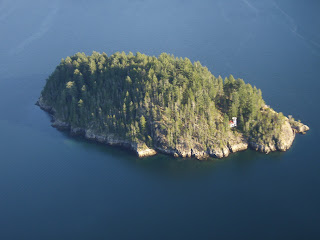
Private Islands

Buying an island may seem like a dream to many, but in reality private islands are sold in almost every budget category. They are not common, because there simply aren’t a lot of them, but there is a wide variety, from a small rocky islet  to a large developed estate.

For some people the owning of the island is enough, and it will never be developed. It will remain a natural escape from the world, perhaps for camping on or just day trips. Or just for someone in a land-locked big city to know, they own an island in the Pacific Ocean.

Other people want to live on the island, at least some of the time if not full-time (and some definitely want to live there full time). That then becomes a more involved exercise. Some people circumvent all these complicated issued by buying an island already developed, and so only requiring upkeep. But others want to create their own, personal retreat and place. For them, the work and the creation of building is part of the desire.

Like any remote coastal property, logistics are a part of the consideration of owning a private island. Here is what you need to consider.

1. How will you get there? Is this easily accessible by boat? How far is it from a launch point? Is it easier to take a float plane to the property? If you want to travel to the island regularly, how long will that take you?

2.   2. What are the services? If there aren’t any already in place, how will you service a residence if that is what you want to have on the island?

3.   3. How will you get supplies to the property?

Private islands are fun to market as each one has something special, a character all its own. People love to look at the listings and we always get lots of questions about them. They are rarely the oddest coastal property we have listed but they are generally the ones that people are most curious about.


It's a Coastal Lifestyle... Live It!

Thursday, 14 April 2022

8 Steps for Preparing for a Recreational or Remote Listing

Ready to sell a recreational property, or your remote residence? Here are some tips to make both the listing and showing process go smoothly. The more of these things that can be done ahead of a site visit, the better for both the photos and site description used our marketing materials.

 1. Accessibility

photo via unsplash

Is the entrance clearly marked with identifiers? Are the access routes clear for vehicles to drive along? If the access is by water, is the dock/property easily visible from the water with identifiers? Are there tie-ups available?

2. Grounds

While people expect to see some equipment, etc on the grounds, have you cleaned up the extra items? Are they neatly put away, or scattered around the property? A general clean up of the grounds is advised. This includes winter blow-down of branches, etc.

 3. Water Supply

photo via unsplash
Has the water supply and source been clearly marked? Are there directions for turning on and shutting off the water if required? Has the water supply been cleaned or serviced recently (if so, paperwork stating the details should be provided)?

 4. Residence

If there is a residence on the property, has it been cleaned? Are there belongings left out or are they put away? The neater it can be left, the better. Do the doors/windows stick? Are there small repairs or projects that can be finished which will enhance the showings? Do you have a spare key to provide us or can one be hidden at the property? 

 5. Docks/Piers/Ramps

photo via unsplash
Are there loose boards? Do they need to be power washed so they aren’t dirty/slippery? Are there simple repairs that can be done to enhance the showing?

6. Outbuildings

Any outbuildings on the property should be accessible and in a reasonable state of cleanliness.

 7. Paperwork

photo via unsplash
If you have done work (or had work/inspections done) on the property, paperwork providing details of that work is always good to have readily available should people ask.

8. Septic System

If there is a septic system on the property, marking the pipes, tank location, etc is a big help, and having any paperwork related to the system on hand is a benefit.

 Doing these things will definitely make it easier to present the property, and gives prospective buyers a better understanding of what your property offers.


It's a Coastal Lifestyle ... Live It!

Thursday, 25 November 2021

Goal Setting for the Business

Do you set goals every year? Whether personal or professional, setting goals can help achieve the outcomes you want. 

 Every year towards the end of November the BCO Team does its goal setting for the upcoming year. We find this so helpful, as it lets us both reflect on what the past year brought at the same time as looking forward to a new year. It allows us to deep dive on what worked, what didn't, what we need more of and what we need less of. It also allows us to kick around new ideas and discuss possible new plans or directions.


Goal setting for BCO puts our clients front and centre. It is all about how can we help our clients achieve their goals in real estate? What information, systems and tools can we provide or develop that will serve our clients' needs?

Meeting our goals means bringing success to our clients and helping them reach their goals. Having a plan in place makes our success, and their success, that much more reachable.

It's a Coastal Lifestyle ... Live It!


Thursday, 26 August 2021

BC's Agricultural Land Reserve

The ALR is a land term that has been around in BC for decades. Most people know it has something to do with farmland, but what is the ALR exactly? Can you build in the ALR zone? What does it mean to own land in the ALR?


ALR land Haida Gwaii

According to the BC Government: The Agricultural Land Reserve (ALR) is a provincial land zone in which agriculture is recognized as the priority use. Farming is encouraged and non-agricultural uses are restricted. ALR land makes up 5% of BC's total land-base.

This does not mean you can't simply live on ALR property. There is no requirement to farm, however there are restrictions on what else you can do on the land. Keep in mind that most ALR land is in an agriculture-rich area, so even if you are not farming your land it is probable that properties around you are being used for agricultural purposes.

ALR land Quadra Island

Properties within the ALR should have it noted on their title, although the Agriculture Land Commission (who oversees the ALR) warns that this is not definitive. Mapping is a help in determining what land is within the ALR as well, and the ALC website hosts a number of mapping applications.

ALR mapping

The Vancouver Island region has ALR land in a number of areas, including in what might be thought of as rural residential areas close to urban centres, so it is good to do your homework when it comes to owning property in this distinct land class. This is something we research on our listings and provide mapping information for if a property does live

It's a Coastal Lifestyle ... Live It!

Thursday, 28 January 2021

Listing a Residential Property in Winter

This winter has seen a more active residential market than in most years, so if you are thinking of listing it is definitely worth talk about. Winter weather can change how to best feature your home and property. These 5 tips can help you get the most out of a winter listing!


1. Lighting
In the winter, especially on the coast where it is often grey outside in the winter months, lighting is crucial. Check that all your lights are bright, change out any weak or dim bulbs.  Look for dark areas in the house and see if lamps or strategically placed lighting will enhance those areas. Warm light in the winter is nice or try using the daylight-style bulbs.


2. Warmth
People love to feel cozy in the winter, but keep in mind that they will be coming in with coats on after being out in the cold air, so a house interior will already feel warmer to them. In other words you want the home warm but not hot. A nice throw on the couch and some soft accent pillows will enhance the cozy feeling.
Photo by Stephanie Harvey on Unsplash

3. Cleaning
In the winter when the outside spaces are dormant and cold the inside needs to shine even more.  Make sure the indoor living spaces are sparkling. Flooring in the winter can quickly become muddy and dirty, so keep watch on that. Also mud rooms and entryways in the winter quickly get cluttered with coats, boots and gear which need to be cleared away.

4. Outdoor Lighting and Entryway
While people won’t spend as much time looking at the outside of the property in the winter, they will notice a dirty entryway or one that is not well lit. Keep it clean and bright, so the entrances are reassuring, welcoming and safe. 
Photo by Nathan Walker on Unsplash

5. Bring the Outdoors In
With very little colour outside, having some fresh flowers or a plant or two inside the home improves people’s moods without them even realizing why. A kitchen or dining room table with flowers in a vase, a green plant in the living room, or even a colourful bowl of fruit can add a fresh and inviting ambiance to a home.
Photo by Scott Webb on Unsplash

It's a Coastal Lifestyle ... Live It!

Thursday, 7 January 2021

Welcome 2021

 How to know what 2021 will bring? At least through the winter and perhaps longer, Covid-19 will continue to be a force to reckon with in all aspects of life, including real estate and office work. We feel confident in our ability to serve our clients’ needs as a team whether in our main office or at our individual home offices.


The recreational and remote markets are doing well. The biggest issue is a shortage of inventory currently – properties are selling faster than the inventory can be replaced! So if you have been thinking about selling,  give us a call to discuss the market and your options.


Predicting the residential market is difficult with Covid, but trends and forecasts indicate that prices will continue to increase slightly and the market will remain strong.

In 2021 we expect to see a further increase in doing business online, something we have worked hard at becoming proficient at in the BCO office and continue to train on. From online searching to completing documentation and even virtual showings, real estate is thriving in the online world. When we do real estate in person, be assured that safety and proper health measures continue to be front of mind for everyone involved.

Real Estate, like every business, is always changing. The BC Oceanfront Real Estate Team continues to improve systems and procedures to both keep up with new requirements and regulations and also to provide top service to all of our clients.

We wish you all a safe, healthy and happy 2021 and look forward to working with you on your real estate needs.


 It's a Coastal Lifestyle ... Live It!


Thursday, 10 December 2020

What Is the Coastal Lifestyle?

This year more than ever the BC Oceanfront Real Estate Team has appreciated the amazing coastal region we call home. We talk a lot about the coastal lifestyle, and how that relates to both our work and our time outside of work.

Big Picture, this has meant Ed and Shelley finding a way to get some time away in the summer especially, but really all year round, for fishing/hunting/camping. This may mean one is out of town while the other is covering the office, or it may mean Ed is at his cabin in Quatsino fishing in the mornings and working remotely in the afternoons and evenings. This year there weren’t so many away trips, but there were still days out on the boats.


On a smaller scale, the coastal lifestyle means week-ends outdoors, and often evenings as well. It means stopping and looking out the windows at the office when someone thinks they spot whales, or an interesting boat is going through the passage between Quadra Island and Campbell River.  It means talk about fishing taking as much time as talk about properties during client meetings, and photo uploads of our week-end adventures to share on social media. It also means that when Shelley and Ed show clients a property they share in the delight a buyer feels upon seeing the wonder of the coast for the first time. After years of living and working on the coast, that feeling of awe and wonder hasn’t gone away.


The coastal lifestyle doesn’t mean you just live on the coast. It means every day you appreciate that coast and the lifestyle it allows you to enjoy. It means you relax a little more often than if you lived in the big city, and getting to spend time outside is a priority.

 We believe in it, we live it and we love to share it.


It’s a Coastal Lifestyle … Live It!

Thursday, 29 October 2020

Real Estate Language


It’s easy for those of us who work in real estate every day to forget that the general public, who maybe buy or sell only a handful of properties in a lifetime, aren’t always well versed in real estate terminology. There is a language that is specific to the world of real estate, from terms involved with listing properties to the language of a real estate contract. The more accessible we can make that language to our clients, the more comfortable and at ease they are going to be during the process.

 Here are some basic terms you may hear mentioned when talking about property sales:

Conditional: “It’s still conditional” – this means that there is an offer to purchase which has been accepted by the seller, and the buyers and/or sellers are now working through the items they placed as subject conditions on the offer to purchase; this is referred to as the due diligence period. There is a set date for these conditions to be removed and if they are the contract will then be considered unconditional. When a contract is in its conditional phase, there is a chance that the purchase may not go through, as the conditions may not be satisfied.

Subject-Free: This relates to the conditions set on a contract (or perhaps there are no conditions). When all subject conditions have been waived or removed and both parties are in agreement then a deal is considered ‘subject-free’ and buyer and seller are obligated to complete the deal as outlined in the contract.

Deposit: While the concept of the deposit is fairly obvious, clients don’t always understand that the deposit will form part of the agreed upon purchase price if the sale goes ahead and is not a separate, stand-alone amount of money.

Appraisal vs Assessment: An appraisal of a property is done by a professional third party accredited appraiser and provides the property’s value as set out in the scope of the appraisal (if it is for market value or lender value for example). An assessment is a property value provided by the BC Assessment Authority and is used by municipal authorities to apply property taxes.

Commission: The gross commission for a listed property is determined at the time of the listing. If there is one agent for the sellers and one agent for the buyers, they will share that gross commission in a pre-determined way (also set out in the listing contract for the property). The gross commission is paid by the seller upon the receipt of funds for the sale of the home, and both agents are then paid from that monies.

The best advice when it comes to dealing with real estate and the language is to ask lots of questions. Your real estate agent is there to assist you, and explaining things you don’t understand is part of the job.

 It's a Coastal Lifestyle ... Live It!


Thursday, 23 July 2020

Making Room for Your Coastal Lifestyle

Lots of people move to Campbell River, and the central/north Vancouver Island region, because of the wonderful outdoor lifestyle opportunities. Camping, boating, kayaking, hiking, atv-ing, mountain biking, skiing, hunting, fishing - the list goes on; as a home base, this region offers some of the most accessible outdoor activity area anywhere. Within 45 minutes of town one can be on a ski hill, at a beach, enjoying a lake, fishing a river, camping in a forest, or exploring the ocean and islands off shore.

With all that recreation, however, comes equipment. And if you are moving here to take advantage of the great outdoors, thinking about where you are going to keep your equipment is important.

Are you thinking of downsizing so you can spend time RVing? Then you need to have somewhere to store your RV. Coming here to fish on the ocean or lakes? Will you have a boat and if so, where will you keep it? Skis, ATVs, mountain bikes, kayaks - all need a place to sit when not in use.

Listings in this region should tell you if RV parking, extra outdoor space and good storage space is available. Most properties allow these types of outdoor items, although there are still some neighbourhoods that do not, so check if there are any covenants on the title restricting property use.

When you come to the area, come prepared to take advantage of all it offers and make sure your home allows you to easily access what you need. Whether that means a sturdy pair of walking shoes or a state-of-the-art RV beside the house is completely up to you!


It's a Coastal Lifestyle ... Live It!

Thursday, 28 May 2020

Private Islands

"You guys sell islands? Like, real islands?"

You can hear the slight awe, and longing, and envy, in the voices when people say this to us. It's true; BC Oceanfront sells private islands - whole, entire islands that are privately owned. They range in price greatly, depending on location, size, amenities, improvements and other details.

Owning an island in reality of course requires a lot of thought and planning. How will you get there? (Generally boat, sometimes float plane.) Do you want protected or open water? How far do you want to be from civilization?

For some people the owning of the island is enough, and it will never be developed. It will remain a natural escape from the world, perhaps for camping on or just day trips. Or just for someone in a land-locked big city to know, they own an island in the Pacific Ocean.


Other people want to live on the island, at least some of the time if not full-time (and some definitely want to live there full time). That then becomes a more involved exercise. Where does the power come from? How will water be obtained? How will the building materials get there? Some people circumvent all these complicated issued by buying an island already developed, and so only requiring upkeep. But others want to create their own, personal retreat and place. For them, the work and the creation of building is part of the desire.

Within the BCO office there is a wealth of knowledge about the realities of coastal properties, including private islands. Ed has spent years working in the remote areas of the coast, making relationships, gathering information and seeing over time what works and what doesn’t. The BCO office team specializes in gathering information about remote areas and recreational properties.

Islands are a dream for so many, and here at BCO, we really can help make that dream come true.

It's a Coastal Lifestyle ... Live It!

Thursday, 2 April 2020

Real Estate and Covid-19

Things continue to develop very quickly in the province and across the country with the response to Covid-19. We have been asked where does that leave real estate? Are people still buying or selling properties? The short answer is - yes. However what that looks like and how it is happening is different than a couple of months ago for many.

The Province of BC has declared that real estate is an essential service during their mandated shut down of non-essential services. We know that people still need to sell or buy properties for many reasons, some more than ever now, and the required channels for this are staying available. Additionally Royal LePage Canada has asked agents across Canada to treat real estate as an essential service, unless otherwise directed by authorities (for instance, Quebec has said real estate is non-essential service) and offer as much service as possible, while respecting all health safety protocols and within personal comfort levels. 

What steps are being taken to insure all parties involved follow the correct protocol and keep everyone as safe as possible? The professional associations for real estate agents across the country are providing both their agents and the consumers guidelines and answers. In BC, the Real Estate Council of BC (RECBC) has created a page for consumers which can be found here. Open houses are no longer being held in person, but in some cases are being done creatively through online and virtual media. Thanks to technology, meetings with clients can happen on line (using video conferencing programs such as zoom or apps such as FaceTime, Whatsapp or Skype) and documents can even be sent and signed electronically while talking on the phone with the agent. Things may happen a little slower, as arrangements need to be made and a lot of phone calls need to happen. But business is still proceeding.

It turns out that here at BCO we've been preparing for such an event and didn't even know it. Because our sellers and buyers often come from all over and are certainly not always both near the actual property in question, we are experienced with and have in place the systems to work remotely with clients. We have done video walk-throughs of a property with our client on Facetime. We regularly send out documents to be signed via electronic means. We often send documents and photos with online storage apps. We are ready to help clients who perhaps are used to doing real estate in the residential markets, face to face, with this new reality of remote and virtual real estate. It is not ideal, but it is possible to do for those who need and/or want to buy or sell real estate now.

We don’t yet know what the impact of Covid-19 will be on the real estate industry. We do know that in the past the recreational and remote markets have reacted differently than the residential markets, in both positive and not so positive ways. 

If you have any questions, please don’t hesitate to reach out by email or phone. We wish you all health and peace during this unprecedented time of change. 


Thursday, 26 March 2020

Toilet Options for Remote and Recreational Properties

One of the many things that need to be considered when looking at a remote or recreational property outside of municipal boundaries is how septic waste disposal happens. There are many options, and each has its own merits.

Indoor plumbing is generally an option, but it can be costly. All properties who choose to have indoor plumbing, and that are not on a municipal waste system, are supposed to have a permitted system, which means installation and inspection by a professional. In our region this is covered by the Vancouver Island Health Authority (VIHA). You can find more information about regulations for septic systems at the VIHA site here.

Many of the systems available still require pumping and disposal of the waste from a holding tank. These can be great options for those living on larger islands where pumping services are available (such as Quadra, Cortes or Gabriola); however not such a great option for many recreational and more remote properties. There are also filtration systems and outflow systems, all of which direct the waste somewhere else (such as gravel fields or in some cases directly out to bodies of water).


For most people when they think of cabins and remote properties, the traditional outhouse comes to mind. These are still very popular and common, and once established require little more than routine maintenance. Outhouses can be fun to decorate and they can range from incredibly rustic to quite fancy.


There are three waterless options for  toilets that property owners can consider. These can be inside a cabin or in an outhouse-style building.

*Composting Toilets. These are toilets that use aerobic processing through composting. This is a controlled composting system that protects the surrounding environment. These are popular systems and readily available in many countries. Here is some more explanation on how they work: http://www.letsgogreen.com/how-composting-toilets-work.html

*Incinerating Toilets. As the name implies these toilets burn the waste. This can be done in a few ways depending on the system's design but generally the waste is reduced to an ash in a holding tank and then can be safely disposed of. This is an information sheet from 1999 created by the EPA in the US, all about incinerating toilets: https://19january2017snapshot.epa.gov/www3/npdes/www3/pubs/incinera.pdf

*Evaporating Toilets. These systems actually dry-out the waste and create a sterile, compact waste that can be safely disposed of in the trash system. There are both passive systems that require no outside electricity and systems that do require some energy input. Evaporating toilets are very low maintenance. http://www.enviroalternatives.com/toiletcua.html

There are solutions for every budget and every lifestyle!

It's a Coastal Lifestyle ... Live It!