

BC Oceanfront Real Estate Team (Ed Handja personal real estate corporation and Shelley McKay personal real estate corporation)
Thursday, 19 March 2020

Thursday, 12 March 2020
Lakes of Vancouver Island
While most of the focus on Vancouver Island is on the ocean water surrounding it, and rightly so, there are also an amazing number of lakes - over 9,000 - both big and small, local and remote, on the island.

As you travel further up the island, there are more and more lakes, but fewer of them have private residences. Some of the most popular are Nitnat Lake outside Duncan, Westwood Lake and Brannen Lake (both in Nanaimo), Sproat Lake near Port Alberni, Comox Lake in the Comox Valley, Upper and Lower Campbell Lakes outside of Campbell River, and Alice Lake near Port Alice.


Upper Campbell Lake
On the southern end of the island Shawnigan Lake and Lake Cowichan are the two best known lakes. These are heavily residential lakes, and used for many recreational purposes. In the summer they can be extremely busy!As you travel further up the island, there are more and more lakes, but fewer of them have private residences. Some of the most popular are Nitnat Lake outside Duncan, Westwood Lake and Brannen Lake (both in Nanaimo), Sproat Lake near Port Alberni, Comox Lake in the Comox Valley, Upper and Lower Campbell Lakes outside of Campbell River, and Alice Lake near Port Alice.

Alice Lake
Many of the lakes are well known for recreation - Shawnigan Lake is popular with water skiers, Nitnat is world renowned for windsurfing, and Alice Lake is well known for trout fishing. Many of the lakes have wonderful camping spots on them, ranging from private campgrounds to large provincial sites and small recreation sites. The lakes in and around Strathcona Park and through the North Island are good examples. Other lakes on the island are known for canoeing, such as the Sayward Loop or Kennedy Lake.

Buttle Lake
Access to the lakes varies from paved road to gravel roads in various stages of maintenance. Most of the popular lakes have excellent day use areas but many of the other lakes have just small access spots that only locals know about.
Wokas Lake
Vancouver Island is one of those rare places that on any given day a person can wake up and think, "Do I want to hang out at the ocean or the lake today?" Both are just a short drive away.
Buttle Lake
It's a Coastal Lifestyle ... Live It!
Thursday, 5 March 2020
What to know about Wells
Dealing with properties outside of an urban centre brings up many questions. One of the big ones we ask/get asked is where does the water come from? The answer can vary from cistern collection (rain water or spring water), to a water licence on a local creek, to a well.

Wells generally come in two forms - dug wells and drilled wells. A dug well does not mean necessarily dug by hand, a bucket auger may be used for deeper wells. You will often hear Ed or Shelley reference these types of wells as shallow or deep dug wells, meaning of course the depth of the well. Drilled wells are just as they sound, drilled by a machine to reach water.

The level of the underground water aquifer, the type of ground material, and the cost of the project all help determine what type of well will be installed. In BC a well should be installed by a qualified well pump installer, and there are specific rules that should be followed during installation. These rules are set out in the Ground Water Protection Regulations of BC.

Well documentation is something that is very useful to have when it comes to selling a property - well logs, installation, etc - so keeping good records if your property has a well will definitely be of benefit.

Wells generally come in two forms - dug wells and drilled wells. A dug well does not mean necessarily dug by hand, a bucket auger may be used for deeper wells. You will often hear Ed or Shelley reference these types of wells as shallow or deep dug wells, meaning of course the depth of the well. Drilled wells are just as they sound, drilled by a machine to reach water.

The level of the underground water aquifer, the type of ground material, and the cost of the project all help determine what type of well will be installed. In BC a well should be installed by a qualified well pump installer, and there are specific rules that should be followed during installation. These rules are set out in the Ground Water Protection Regulations of BC.

Well documentation is something that is very useful to have when it comes to selling a property - well logs, installation, etc - so keeping good records if your property has a well will definitely be of benefit.
It's a Coastal Lifestyle ... Live It!
Thursday, 27 February 2020
Remote is in the Eye of the Beholder
What is YOUR remote?
We are always cautious when someone tells us they want a remote property. Over the years, Ed and Shelley have learned that one person's remote is another person's crowded community. They ask a number of questions to help determine just what a specific person's remote might be.

1. Do you want/need road access?
For some people remote means no one can drive to the property (generally getting there by boat instead, although some may even be hike in) while for other people having road access may be important, even if it's hours away from civilization.

2. Do you want/need any services?
Does your version of remote mean absolutely no services? Or do you still want access to power or cell service or telephone/internet service?

3. How close do you want other people?
Remote for you might mean no one within sight or sound of your property. For someone else it might mean being part of a small community of properties.

4. How close do you want to be to a service centre or amenities?
While someone may want to live off-grid, they may not want to be more than a couple hours from a service centre or at least access to basic amenities such as food shopping or fuel. Someone else may not care about access to amenities, being willing to travel over a distance to get to any sort of services.

Whatever your remote may be, the BC Oceanfront Real Estate Team can likely find the property for you!
We are always cautious when someone tells us they want a remote property. Over the years, Ed and Shelley have learned that one person's remote is another person's crowded community. They ask a number of questions to help determine just what a specific person's remote might be.

1. Do you want/need road access?
For some people remote means no one can drive to the property (generally getting there by boat instead, although some may even be hike in) while for other people having road access may be important, even if it's hours away from civilization.

2. Do you want/need any services?
Does your version of remote mean absolutely no services? Or do you still want access to power or cell service or telephone/internet service?

3. How close do you want other people?
Remote for you might mean no one within sight or sound of your property. For someone else it might mean being part of a small community of properties.

4. How close do you want to be to a service centre or amenities?
While someone may want to live off-grid, they may not want to be more than a couple hours from a service centre or at least access to basic amenities such as food shopping or fuel. Someone else may not care about access to amenities, being willing to travel over a distance to get to any sort of services.

Whatever your remote may be, the BC Oceanfront Real Estate Team can likely find the property for you!
It's a Coastal Lifestyle ... Live It!
Thursday, 20 February 2020
BCO Coastal Gems: Malcolm Island and Sointula
Malcolm Island and the town of Sointula offer a picturesque
west coast lifestyle, complete with colourful homes, historic buildings, pretty
fishing boats and lots of walking trails.


Sointula was originally founded by Finnish
immigrants in the early 1900s looking for a better way of life, and that
history is still reflected in the town. It has also been an active fishing
centre in the region.
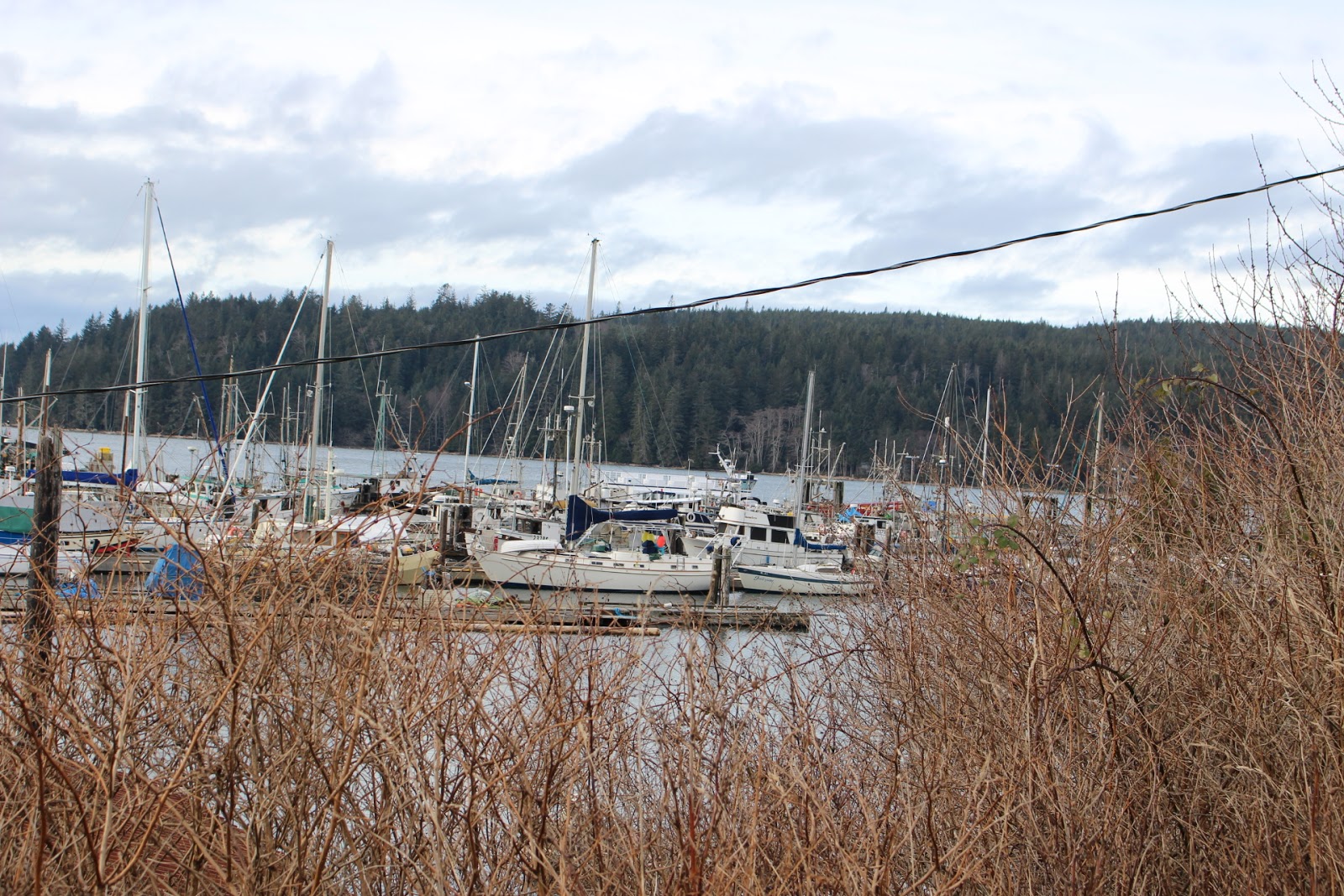

Accessed by ferry from PortMcNeill on Vancouver Island, Sointula has shopping, fuel services, private and
public docks, a library and a medical clinic among other amenities. There is a
vibrant community of approx. 800, an eclectic mix of old-time families,
artists, fishermen and those looking for a quieter life.

Whale watchers and outdoor
enthusiasts favour Malcolm Island for its whale rubbing beaches and hiking
trails, especially the Beautiful Bay Trail between Bere Point and Malcolm Point.
There are a few campsites on the island, including Bere Point Regional Parkcampground as well as a number of B&Bs and guest houses. Pulteney Point
lighthouse sits on the northeast point of the island and is accessible by a
nice beach walk. The main roads along the eastern shore are paved, while the
further out roads are gravel.


Malcolm Island sits at the
junction of Queen Charlotte Strait, Broughton Strait and Johnstone Strait off
the northern end of Vancouver Island.

Definitely worth a trip to explore!
It's a Coastal Lifestyle ... Live It!
Thursday, 13 February 2020
Mining Past and Present Vancouver Island
While Vancouver Island is most commonly associated with the resource-based industries of forestry and fishing, the island also has a strong and deep history of mining.
Coal mining began on the island (and surrounding islands) in the 1800s, with the discovery of coal in the Nanaimo region. This initial discovery was facilitated by local First Nations, who noticed the coal that Hudson’s Bay Company employees used and offered the information that coal was available locally.
Mining jobs brought many people to the island, creating small towns of workers (eg Cumberland) while areas of Nanaimo and Victoria were built upon the success of prominent mining families.
Mining became big business, first coal and then metals. The island is physically marked by the industry, with both small, abandoned mine sites and large decommissioned mine sites. There are two large mines near Campbell River, Quinsam Coal and Myra Mines (metals). Quinsam was last shut down in May 2019. Myra Mines is currently operational but has had slow-downs and shut downs in the past. Both of these large mines are affected by global demand and pricing.
In January of this year Geoscience BC released some enhanced data from a geological aerial survey that includes information which can help geologists and mining experts locate potential metals. This is positive news for people interested in mining on northern Vancouver Island.
In January of this year Geoscience BC released some enhanced data from a geological aerial survey that includes information which can help geologists and mining experts locate potential metals. This is positive news for people interested in mining on northern Vancouver Island.
There are still individual mine claims throughout the back country of Vancouver Island as well as on the smaller islands and on the stretch of mainland coast across from northern Vancouver Island. Whether any of these are active is hard to determine. There are also still people who pan in the local rivers, hoping to find a gold nugget or two.

north Vancouver Island old mine site
Properties that come up for sale in the more remote areas of the islands can be impacted by a mining background. Some may be actual mine sites while others can be at least partially made up of old mining claims.

there were mine sites on the hillside of Port Neville
Hatley and Cragidarroch Castles, the community of Cumberland, Newcastle Island, the IslandCopper Mine outside of Port Hardy, small mining relics and tailings piles, unused mining claims, the numerous dams around Nanaimo – all of these are part of the legacy mining has created on Vancouver Island.
It’s a Coastal Lifestyle … Live it!
Thursday, 6 February 2020
What Does No Zoning Mean?
Many rural properties in BC are excluded from zoning bylaws
by their respective Regional Districts and are simply referred to as No Zoning
areas on maps. However, if you read the fine print, most Regional Districts
will inform you that there are still requirements. This example is taken from
the Mount Waddington Regional District site:
“While there is no Building Bylaw in effect outside of the
communities of Coal Harbour, Hyde Creek, Malcolm Island and Woss, that requires
a Building Permit or Site Permit to be applied for and issued for new
construction, all construction must meet the requirements of the BC Building
Code.”
This may seem to be a bit too much structure for someone
who just wants to go build a cabin in a remote location, there are some good
reasons to pay attention, and not just because all buildings built in BC are
required to meet the BC Building Code.
No matter how we might want our recreational or remote
property to stay in the family for generations, sometimes life happens. If you
need to sell a property that you have built on within 10 years of the building
being completed, you have to have a Home warranty (Homeowner Protection Act) in
order to be able to sell. This is becoming more of an issue, and there are actual
properties that cannot be sold because they don't have a home warranty or Owner
Builder Authorization.
Insurance premiums are constantly on the rise and getting
insurance for a remote property can be a challenge. Building it to
code may help your chances of getting insured.
A lot of the basic Building Code is around safety issues. In
remote areas where services such as fire departments and emergency support are
minimal or non-existent following the code may help keep both the property and
the people using it protected and as safe as possible.
Education and information are key, wherever you want to
build in BC.
Resources:
http://www.bccodes.ca/building-code.aspx?vid=QPLEGALEZE:bccodes_2012_view
(A copy of the BC Building Codes is likely in your local library as well, or at
your city/village/regional district offices)
It's a Coastal Lifestyle ... Live
It!
Subscribe to:
Posts (Atom)