Thursday, 24 August 2017

Homesteading History on the BC Coast

The BC Coast is not just rich in First Nations history, it is also rich in homesteading history. Throughout the last two centuries as resource workers and other groups made their way to the coast small groups, individuals and families took up residence throughout the coast, including on the many islands between the mainland and Vancouver Island.

It is not uncommon to come across relics from homesteading in the middle of what looks like untouched forest or grassland. From broken fencelines to house foundations and even old tools, evidence is abundant when you start to look. In particular on the north end of Vancouver Island, it is easy to stumble across pieces of machinery and household items from the early 1900s. Apparently at one time 1000 people lived in an area where only a handful of people now live at the Cape Scott area of Vancouver Island.

Another visual reminder of this past history is the abundance of fruit trees scattered throughout the region, from old orchards that have been reclaimed by the surrounding wild. Going for walks in parks and along beach fronts it is not uncommon to find a gnarled old plum or apple tree, still producing fruit. Along with the fruit trees it is possible to also find overgrown domestic plants that survived long after the homestead itself has disappeared. Rhododendrons and holly bushes are common ones to come across.

People have come and gone for various reasons. A number of Scandinavian groups came in the early 1900s to places such as Cape Scott and Sointula on Malcolm Island, looking to establish a new type of community. Many of the homesteaders in the Discovery Islands were families of the local resource workers whose livelihoods depending on the fishing, mining and forestry industries. Then in the 60s there was another wave of homesteading as the hippy generation found the mild weather of the coast perfect for their communes and back-to-the-earth ideals.

As larger communities grew on the coast and on Vancouver Island especially, many of the homesteader families moved away from the more remote areas to the convenience and steady jobs that towns could offer. Now it seems the homesteading movement is gathering interest and attention, and so more people are coming to the coast to once again connect with those more remote areas.

It's a Coastal Lifestyle ... Live It!

Thursday, 17 August 2017

Summer on the Beach

Vancouver Island (and the surrounding small islands) is well known for rugged coastline and windswept vistas. While Pacific Rim National Park is world-famous for its sweeping sandy shores, not as many of the other sandy beaches are as well known. But in the summer, locals and tourists alike find them!
Long Beach, Pacific Rim National Park

Rathtrevor Beach, in Parksville, is perhaps the next most well-known sandy beach. This one stretches for miles, and at low tide there is more than enough room for everyone to explore and enjoy a piece of sand.

Further up the island in the Comox Valley are Miracle Beach and Saratoga Beach. Along that same stretch is Storries Beach. Miracle Beach and Storries beach offer the benefit of rocky sections of the shoreline that provide for hours of entertainment as well as expanses of sand at lower tides.

Miracle Beach

On the islands in the waters of Vancouver Island there are also many beautiful sand beaches. Tribune Bay on Hornby Island is perhaps one of the best known, while Smelt Bay on Cortes Island is a true gem.

Smelt Bay

Pacific Rim isn't the only place for sandy beaches on the west coast either. For the intrepid traveler willing to go further afield, Raft Cove and San Josef Bay offer beautiful open beaches with views across the open Pacific.

San Josef Bay

The south island also has its share of beaches, with Victoria and Sooke having numerous sandy shorelines to find (Willows beach, Esquimalt Lagoon, Witty's Lagoon, China beach, to name a handful).

So while we may all enjoy exploring our rugged coast, we also have the opportunity on a summer's day to bask on a sandy beach and soak up all that summer has to offer.

It's a Coastal Lifestyle ... Live It!

Thursday, 3 August 2017

Marine Traffic off Vancouver Island East Coast

The waterways off Vancouver Island are a highway for all manner of boats. While most people associate fishing - both commercial and recreational - with the area, the marine traffic is made up of much more than just fishing boats of all sizes.
 commercial fishing vessel off Malcolm Island
Ferry boats are a way of life for many islanders. These rugged vessels carry passengers and vehicles year-round on the east side of Vancouver Island, although serious weather can postpone a trip or two!
on the deck of the Malcolm Island ferry from Port McNeill

Quadra Island ferry running to Campbell River

Barges are a common sight as well. These ocean trucks carry goods to the islands and central BC coast, with the help of the rugged tugboats. 
Barge on its way through Discovery Passage
Frequently navy boats are seen in the waters off the island, both on the east and west coasts.
Navy vessel off Nanaimo
The biggest boats that use the marine highway around the central and northern end of the island (the southern end around Victoria does see a fair bit of large freighter traffic as they head out to open waters from Vancouver and Washington State) are cruise ships. These are a regular sight in the spring and summer months, and if you see them from close in they are amazingly big!
Norwegian Sun cruise ship in Discovery Passage
The waterways of Vancouver Island are vibrant and busy, keeping goods and people moving to and from the island. Add in the pleasure boats, sail boats, kayaks and so on - and at the height of summer the marine traffic can outnumber the road traffic around many island communities!
It's a Coastal Lifestyle ... Live It!

Thursday, 27 July 2017

Provincial Parks on Vancouver Island

You can't drive more than an hour on Vancouver Island without hitting a Provincial Park, or so it seems. Did you know there are 85 provincial parks on and around Vancouver Island, with another 30 in the Gulf and Discovery Island groups?
Buttle Lake, Strathcona Provincial Park
Vancouver Island is home to the very first provincial park in BC - Strathcona - which stretches along the centre of Vancouver Island and encompasses a variety of mountains and lakes providing serious hiking, boating, rock climbing and camping opportunities. Strathcona is a popular destination for wilderness seekers, as it provides two large drive-to campgrounds as well as a myriad of hiking trails and back country camping sites.
Paradise Meadows, Strathcona Provincial Park
While many of the parks are well known, such as Miracle BeachRathtrevorLittle Qualicum Falls and Bamberton, others are often known only to a select few. Parks such as Artlish CavesWhite Ridge and Sooke Mountain are not featured in magazines or tourist brochures, but are simply there to be found for those seeking an adventure.
Miracle Beach Provincial Park
Some of the parks are marine parks, encompassing bodies of water that have been deemed worthy of protection. While beaches or small islands may be associated with these parks, generally they are accessed by boat. A few, like Raft Cove, do have trail access but it is not well maintained.
Raft Cove Provincial Park
The numerous parks on the island provide a wonderful opportunity for exploration and speak to the amazing natural beauty of this area.

It's a Coastal Lifestyle ... Live It!

Thursday, 20 July 2017

Marine Parks in Coastal BC

The coast of BC has over 40 designated marine parks. These are parks that include both water and land areas but are generally accessible by float plane or boat only (with some exceptions). Many of them allow wilderness camping but only a few offer even basic services (an outhouse, water, campsites).
Rebecca Spit Marine Park, accessible by road as well as boat on Quadra Island.
These marine parks run along the entire coast of BC and among the numerous islands that dot the coast. They are an attraction for boaters, kayakers, hikers and many others. The largest marine park on the coast is the Broughton Archipelago Marine Park, off the NE coast of Vancouver Island, which consists of dozens of small islands and the waters around them. This park is very popular with kayakers and people whale watching.


Marine parks often provide a welcome refuge for people traveling along the coast, and are common meet-up spots for boaters.  Desolation Sound Marine Park, along the central coast, is very popular with boaters due to its protected waters, easy access to the Discovery Islands and its beautiful beaches.
private properties within Desolation Sound Marine Park

Some of the remote and recreational properties we have listed through the BC Oceanfront office either border or are very near to marine parks. A select few are even lucky enough to be private property within a marine park - very rare.
flying over Surge Narrows Marine Park


It's a Coastal Lifestyle ... Live It!

Thursday, 13 July 2017

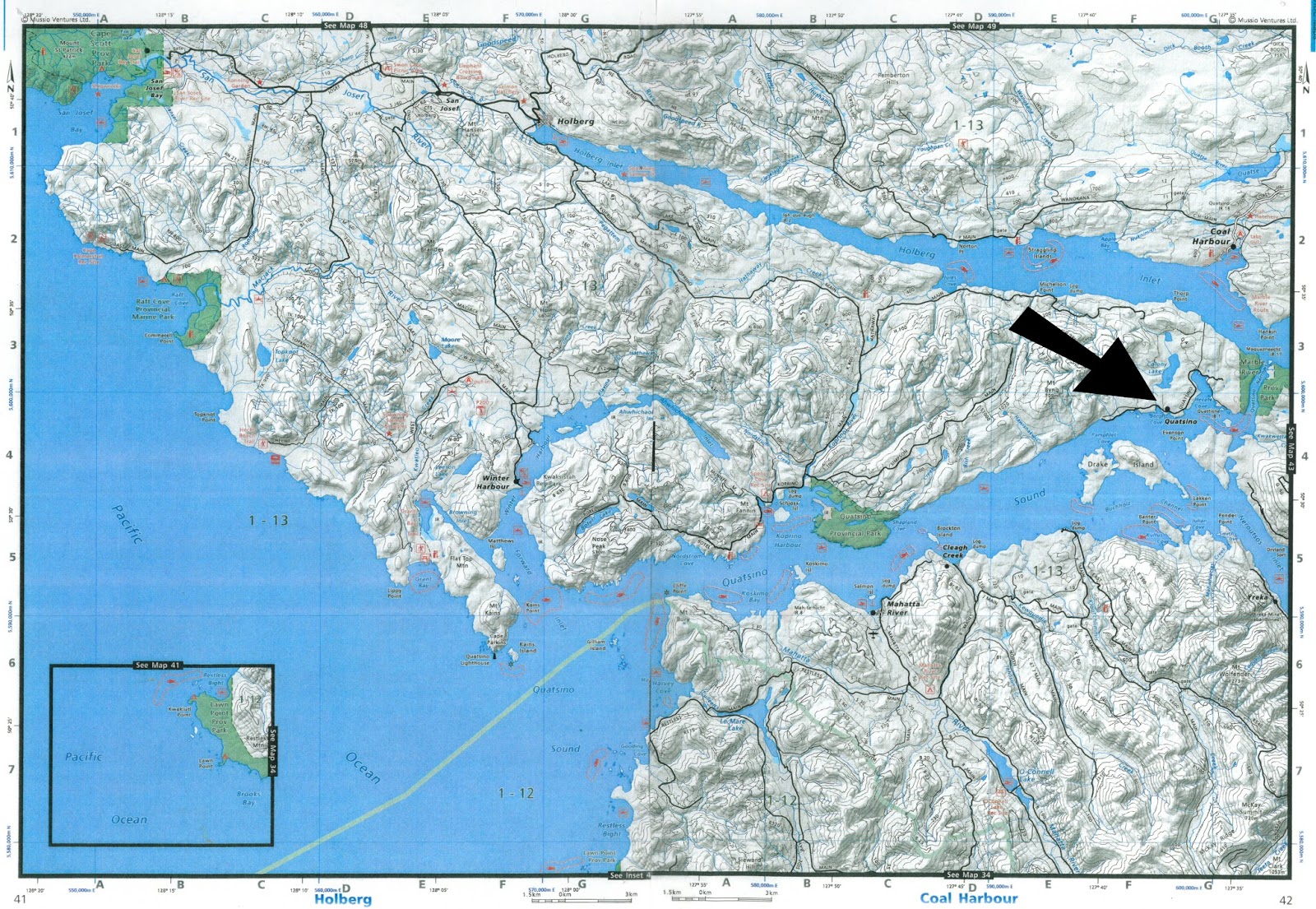
BCO Coastal Gems: Quatsino

If you have spent any time talking with Ed, or looking at our website/facebook page, you know that we have an affinity here for Quatsino. This water access community on the north-west coast of Vancouver Island embodies much of what makes great island living.


Quatsino is inside Quatsino Sound, about a 40 minute boat ride to the open west coast waters off Vancouver Island. It is most commonly accessed by boat from Coal Harbour, although you can also launch at Port Alice and even Winter Harbour.

Quatsino was at one time part of a large coastal network in the region, when canneries, mines and logging were extremely active. With its protected waters and easy access, it is still a chosen spot for many outdoor enthusiasts.


There is an active community there, with approx, 20 year-round homes and a higher number of seasonal residents. A road connects the community from one end to the other, and there is power to the community - an unusual bonus in water access communities.


Add to the convenience and amenities the beauty of the region and you have a magical coastal place.

It's a Coastal Lifestyle ... Live It!

Thursday, 6 July 2017

Fires and Fog Zones

Coastal BC, including Vancouver Island, is known for its rainfall. Those rains feed the amazing temperate rainforest that blankets much of the coastline, and is the cause of the nickname The Wet Coast. However, while much of the year can be wet it isn't wet all year. The beauty of the west coast is that summers are often warm and dry.


Warm and dry summers are wonderful for those who live here, making the trade off of warm, wet winters a good one. However, dry conditions are not always a good mix with people and forests. Wildfires happen naturally enough with lightening strikes during dry weather. Wildfires from human causes are a problem. 

Most summers, if the conditions are typical, the province implements a fire ban. This year the ban went into effect at noon today (July 6) for all of the coast. No campfires, no backyard fires, no beach fires.

Unless, that is, you are in the fog zone. This is something else particular to the coast, a slim stretch of coast along the open ocean that gets a lot of fog and damp air, even when the rest of the coast is experiencing warm, dry summers. The fog zone is exempt from the fire ban.


The dry weather also greatly impacts our forestry and reforestation workers, as work can be shut down in the summer if it is felt that the dry conditions cause danger with the machinery or risk from fires. Salmon bearing rivers are impacted as well, and rivers with dams are carefully controlled to make sure there is still enough water in the system for salmon habitat not to be damaged.

As true islanders and west coasters, we here at the BCO office will make the most of our warm, dry summer - even if it means no campfires for a while.

It's a Coastal Lifestyle ... Live It!